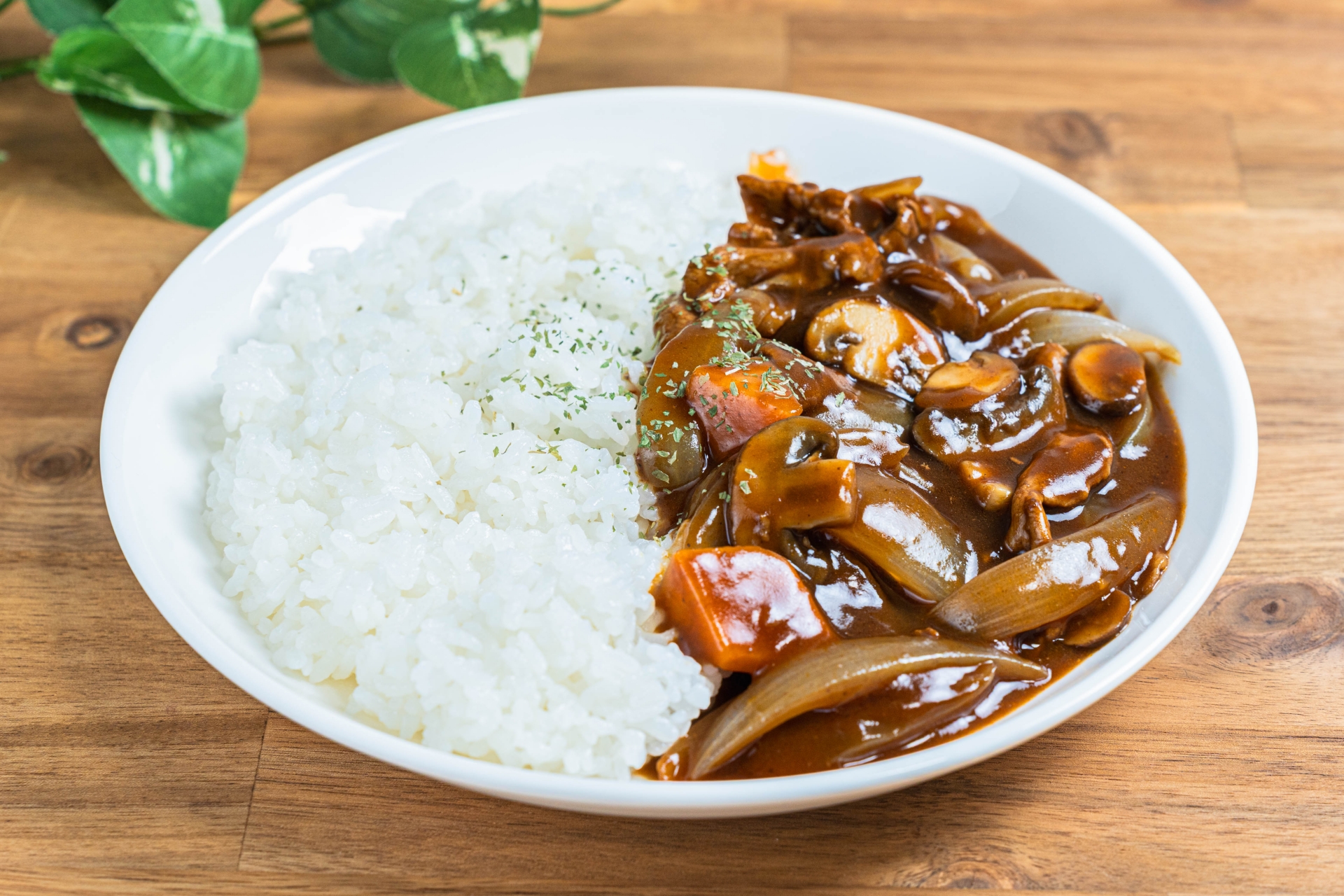
“Hayashi rice looks a bit like curry, but it’s not curry, and it’s not quite stew either… yet for some reason you suddenly really crave it!”
If you’ve ever had that vague feeling and gone searching online, you’re not alone. In short, the charm of hayashi rice lies in the fact that it’s a Western-style dish born in Japan, with a unique history, and that it has evolved into a comforting, easy-to-enjoy staple on dining tables everywhere.
In this article, we’ll look at where hayashi rice came from, how it developed into its current form, and what makes its flavor so addictive, in a casual and easy-to-understand way. By the time you finish reading, you might just find yourself thinking, “Alright, tonight’s dinner is hayashi rice.”
What Is Hayashi Rice? Basic Features and Appeal

A Unique Dish, Different from Both Curry and Beef Stew
Hayashi rice is a Western-style Japanese dish made by slowly sautéing thinly sliced beef and onions, simmering them in a demi-glace or tomato-based sauce, and then serving that sauce over a bed of rice. At a glance it can look similar to curry rice, but the big difference is that hayashi rice emphasizes richness and mildness rather than spices.
In curry rice, the main players are the aroma of the spices and the sharpness of the heat. In hayashi rice, however, the stars are the wine and demi-glace, the sweetness of the onions, and the gentle acidity of the tomatoes, all layered together to create a deep, complex sauce. At the same time, it’s not as heavy as beef stew; it’s light enough that you can casually enjoy it with rice.
This “not as heavy as stew, not as spicy as curry” middle ground is exactly what makes hayashi rice such a uniquely appealing dish.
Why It Has Long Been Loved as a Home-Cooked Dish
Although hayashi rice was first served as a Western-style restaurant dish, it has now firmly established itself as a classic home-cooked meal. Using store-bought roux makes it hard to mess up, and as long as you have beef and onions, you can basically make it, which is perfect for a weeknight dinner.
Another reason for its popularity is that it’s easy for a wide range of people to enjoy, from children to adults. Since it isn’t very spicy but still has plenty of sweetness and depth, it’s a great option for kids who find curry too hot and for adults who prefer richness over spice.
You can enjoy carefully crafted hayashi rice at Western-style restaurants, and at home you can tweak a basic recipe to create your own version. This “outside and at home” two-way enjoyment is one of the reasons hayashi rice has stayed popular for so long.
The Origins of Hayashi Rice: Two Main Theories
The Hayashi Yūteki (Early Maruzen Founder) Theory
There are several theories about the origins of hayashi rice, but the most famous is the one that credits Hayashi Yūteki, the founder of the Maruzen bookstore chain. According to Maruzen’s own company history and related accounts, in the early Meiji era Hayashi prepared a dish by simmering leftover meat and vegetables and serving them over rice. People started calling it “Hayashi-san’s rice,” and over time the name evolved into “hayashi rice.”
This episode even led to the establishment of “Hayashi Day” on September 8th, Hayashi Yūteki’s birthday. In other words, hayashi rice didn’t begin as a simple staff meal; its roots lie in a Western-style “mixed stew” created to welcome and treat others.
The Imperial Hotel Origin Story
Another well-known story claims that hayashi rice was first made as a staff meal by a chef named Hayashi (sometimes associated with famous Imperial Hotel chef Akiyama Tokuzō). The Western-style dishes served at the Imperial Hotel were hugely influential in Japan’s culinary history, and hayashi rice is said to be one of the dishes born in that environment.
In this version, leftover meat and vegetables from the hotel kitchen were simmered with demi-glace sauce and ladled over rice. The staff loved it, and eventually it made its way onto the official menu. The idea that hayashi rice began as a “fancy, luxurious staff meal” in a prestigious hotel really fits the elegant image of the dish.
A Japanese Western Dish Shaped by the Culture of Eating Rice
There is also a theory that the English phrase hashed beef with rice slurred into “hayashi rice.” According to this view, hayashi rice emerged when European-style beef stews were adapted to be eaten with rice in Japan.
Whichever story you believe, the common thread is clear: hayashi rice was strongly influenced by Japan’s rice-centered food culture. It combines Western-style spoon-friendly stews with plain white rice, then adjusts the flavor balance so the sauce goes perfectly with rice rather than bread. Over time this combination solidified into the unique style we now call “hayashi rice.”
A Western-Style Dish That Evolved Uniquely in Japan
How the Flavor Changed Over Time and Spread to Homes
Hayashi rice first appeared in Japan as a Western-style restaurant dish during the Meiji and Taishō eras. After World War II, during the period of rapid economic growth, it began to spread into ordinary households as well.
In the early days, the demi-glace used in restaurants was slow-cooked in the kitchen and not something easily replicated at home. But with the appearance of canned sauces, ready-made pouches, and roux blocks, it became much easier to make hayashi rice at home.
School lunches also played a big role in its spread. Kids who grew up eating hayashi rice at school held onto that taste as a “nostalgic flavor,” and as adults they naturally continued to choose it at restaurants and in their own cooking.
Two Classic Styles: Demi-Glace and Tomato-Based
Today, hayashi rice generally falls into two main styles: demi-glace based and tomato based.
Demi-glace versions use a rich brown sauce, often built from butter, flour, and veal or beef stock. Tomato-based versions, on the other hand, rely more on tomato puree and red wine, resulting in a lighter sauce with a pleasant acidity.
Many long-established Western-style restaurants stick stubbornly to their own traditional recipes. Some take pride in their deep, thick demi-glace, while others highlight the refreshing acidity of tomatoes for a lighter feel. At home, people often start with store-bought roux and then adjust the flavor to their liking with a bit of ketchup, Worcestershire sauce, or other seasonings.
You could say that all over Japan, countless personal “my hayashi rice” recipes have been born.
The Flavor Structure Behind the Appeal of Hayashi Rice

The Balance of Beef, Onions, and Sauce
The real backbone of hayashi rice is the interplay between the beef, the onions, and the sauce that ties everything together. Thinly sliced beef is quickly sautéed so that its juices release into the pan, then simmered so its umami seeps into the sauce. Onions, when slowly cooked down, become sweet and mellow, giving the entire sauce natural depth and body.
When red wine and demi-glace are added, the umami, sweetness, and acidity come into balance, creating both a punchy first bite and a “the more you eat, the more satisfying it becomes” kind of richness. If you use more tomato, the additional acidity creates a pleasant sharpness that keeps the aftertaste from feeling too heavy.
Why It’s Both Easy to Eat and Deep in Flavor
What makes hayashi rice truly special is that it’s both gentle enough that kids can happily gobble it up, and complex enough in flavor that adults find it deeply satisfying. It isn’t very spicy, and the thick sauce clings nicely to the rice, so it’s easy and comforting to eat. At the same time, the slowly sautéed onions, simmered beef, and layers of wine and demi-glace give it real depth, so it never feels bland.
This balance of “soft and comforting” with “deep and rich” is exactly why hayashi rice has long been loved as one of the most soothing dishes among Japan’s Western-style classics. Like curry, it’s something you can eat often without getting tired of it, yet it also feels special enough to serve on days when you want dinner to feel a little elevated.
Hayashi Rice You Should Try at Least Once: Recommended Restaurants
Traditional Hayashi at Old-School Western-Style Restaurants
If you really want to experience the magic of hayashi rice, start by trying a plate at an old-school Western-style restaurant.
In Ginza, Tokyo, “Rengatei” is one such historic restaurant that played a major role in shaping Japan’s Western-style food culture. Their hayashi rice, made with carefully prepared demi-glace sauce, is often cited as one of the “original” versions of the dish. Everything from the shredded cabbage garnish to the way the rice is plated contributes to a complete “classic Japanese Western food” experience.
Another famous spot is “Grill F” in Gotanda, founded in 1950. Their signature hayashi rice features generous amounts of beef, onions, and mushrooms hidden beneath the sauce. The sauce itself is slow-simmered to a deep richness and has earned a loyal following.
Dishes like these at long-standing restaurants let you “taste the history” along with the food, which is a different kind of pleasure from eating hayashi rice at home.
Modern Takes and Creative Versions

In contrast, there are also many restaurants offering more modern takes on hayashi rice. In Ginza and other central Tokyo neighborhoods, you’ll find places that base their cooking on traditional Western-style recipes but introduce contemporary touches through plating and subtle tweaks to the sauce.
For example, famous establishments like “Shiseido Parlour Ginza Main Store” or “Ueno Seiyoken (Matsuya Ginza branch)” serve refined hayashi rice in elegant, classic surroundings. These dishes are both nostalgic and stylish, embodying the idea of “modern classic” Western food in Japan.
You’ll also find “omu-hayashi,” where a fluffy omelet is placed on rice and then generously topped with hayashi sauce, as a signature menu item in some restaurants. This kind of “hybrid” dish shows how hayashi rice continues to evolve as a playful, next-generation Western-style comfort food.
Regional Styles Around Japan
Hayashi rice isn’t just a big-city dish; it’s also served in local Western-style restaurants and cafes all over Japan, each with its own twist.
In Tokyo, for example, “MARUZEN Café Nihonbashi” and “Hibiya Matsumotoro” are well-known spots where hayashi rice is a popular menu item. The former serves “Hayashi rice” with a direct connection to Hayashi Yūteki and the Maruzen tradition, while the latter offers a “high-class, old-fashioned Western food” experience in the greenery of Hibiya Park.
In Osaka and other cities, long-running Western-style restaurants and curry shops often serve their own original hayashi rice or omu-hayashi. Each city and each shop has its own “this is our hayashi rice” identity.
When you travel for work or leisure, ordering hayashi rice at a local Western-style restaurant can be a fun way to get a taste of that region’s history and flavor—a small “food journey” on a single plate.
Tips and Modern Twists to Enjoy Hayashi Rice Even More
Cooking Tips and Small Tweaks to Elevate the Flavor
When you make hayashi rice at home, a few simple techniques can bring your dish much closer to restaurant quality. The first key is how you cook the onions. If you take the time to sauté them slowly until they’re close to caramelized, they add deep sweetness and richness to the sauce. Go low to medium heat and be patient so they brown without burning.
Beef can quickly become tough if overcooked, so it’s often best to sauté it just until the surface changes color, then remove it from the pan. Once the sauce has come together, you add the beef back in and finish cooking it gently. This helps keep the meat tender.
Even if you’re using store-bought roux, adding a splash of red wine or a spoonful of tomato paste, and finishing with a small pat of butter, can dramatically boost aroma and depth of flavor.
Cooking the rice slightly on the firm side helps it stand up to the sauce, creating a better balance in each bite. When plating, creating a visible “border” between the rice and the sauce on the plate also gives that classic Western-style presentation and makes the dish feel more special.
From Japanese-Style to Quick and “Local” Variations
Modern hayashi rice isn’t limited to the classic style; with a few tweaks, it can take on many different personalities.
Adding soy sauce, mirin, or a bit of dashi stock creates a “Japanese-style hayashi rice” with an even stronger harmony between the sauce and plain white rice. This version tends to be especially appealing for people who love traditional Japanese flavors.
On busy days, you can still make a satisfying hayashi rice by quickly sautéing thinly sliced meat and onions, then simmering them with roux and water. Adding extra vegetables, mushrooms, or root veggies improves the nutritional balance and makes the dish more filling and colorful.
You can also enjoy “local hayashi” made with ingredients from particular regions. Some areas highlight local brand beef, while others feature plenty of local vegetables for a more plant-forward version. These “regional hayashi rice” dishes pack the charm of a place into one plate and leave a lasting impression as travel memories.
At home, you can do the same by using local produce and meats from your area to make your own “my hometown hayashi rice.” That simple step can turn your usual hayashi rice into a slightly more special treat.
Knowing the Charm of Hayashi Rice Makes Your Next Plate Even Better

Hayashi rice may sometimes seem overshadowed by curry, but in reality it’s a Japanese Western-style dish with surprisingly deep history and variety. You can enjoy it in many ways: savoring a traditional plate at a long-standing restaurant while thinking about its origin stories, or slowly refining your own home recipe with little adjustments here and there.
Next time you sit down to a plate of hayashi rice, try asking yourself, “What kind of story is behind this hayashi?” When you do, every bite is likely to feel just a bit more special—and the dish you thought you already knew might become one of your new favorites all over again.