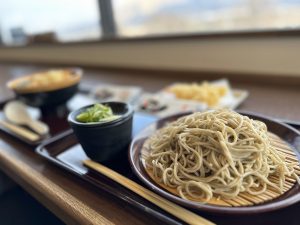
Udon is one of Japan’s most beloved dishes, often called a “national food” for its popularity throughout the country. Its chewy texture and simple yet comforting taste have been enjoyed across generations and ages. From Kagawa’s Sanuki udon to Akita’s Inaniwa udon, different regions in Japan bring their own unique flair to this iconic noodle dish. In this article, we’ll explore why udon is so loved, introduce the basics of its history, and provide a simple recipe for making hand-pulled udon at home. By the end, you might find yourself falling even more in love with this humble yet versatile dish!
Udon’s History: Its Deep Connection to Japanese Food Culture

The Roots of Udon and China’s Culinary Influence
The origins of udon are widely thought to stem from ancient China’s culinary traditions. In the Nara period (710–794 CE), Japanese envoys sent to China (known as kentoushi) returned with culinary techniques, including a dish called sakubei—a type of noodle made from wheat flour. This is believed to be the precursor to modern udon. However, at that time, the dish did not resemble the long, thin noodles we know today. Instead, it was likely served in a flatter or dumpling-like form. These early variations were also reserved for special events or religious ceremonies and weren’t common in everyday meals. Over time, Japanese culinary practices adapted these techniques, turning them into something uniquely theirs.
Evolution of Udon During the Kamakura and Muromachi Periods
Between the Kamakura (1185–1333 CE) and Muromachi periods (1336–1573 CE), Japan made significant advancements in milling techniques and noodle-making processes. It was during this time that udon began to resemble its current form. Historical records from this era refer to “unton” (written as 饂飩 in kanji), an indication of how the dish became more widespread. While the word itself likely has Chinese roots, the dish evolved into a truly Japanese food, distinct in flavor and preparation. Udon also became a favored dish in temples, where it was prepared as part of Shōjin Ryōri (Buddhist vegetarian cuisine), contributing to its reputation as a refined and versatile food.
Udon’s Rise to Popularity in the Edo Period
During the Edo period (1603–1868 CE), udon began making its way into the everyday meals of the common people. Advances in wheat cultivation and availability made udon an accessible and affordable option for the masses. Regional styles of udon also began developing during this time, giving rise to staples like Kagawa’s Sanuki udon and Akita’s Inaniwa udon. Additionally, udon shops started appearing in cities like Edo (modern Tokyo), allowing people to enjoy udon as a convenient and satisfying meal outside the home. Different parts of Japan also started developing their own preferences: Kansai (Kyoto-Osaka) embraced light broth made with dashi and thin soy sauce, while Kanto (Tokyo) favored richer, darker soy-based broths. By the end of this period, udon had firmly established itself as a “people’s food,” appreciated for its simplicity and hearty satisfaction.

Why Udon is So Loved Across Japan

One of the reasons for udon’s enduring popularity is its “blank canvas” quality. Its simple flavor makes it incredibly versatile, allowing for endless regional and seasonal variations. In Kagawa (Sanuki Udon), the chewy texture pairs perfectly with plain dashi or soy-based dipping sauces, while in Kanto (Eastern Japan), dishes like stir-fried Yaki Udon or richly flavored Curry Udon have become staples.
Furthermore, udon is a relatively low-calorie option compared to other noodle dishes, making it easy to customize for health-conscious eaters. For example, topping udon with eggs boosts protein content, while adding nori (seaweed), green onions, or wakame enhances its vitamin intake. Its adaptability and ease of pairing with other ingredients make udon a meal suitable for everyone—from light, refreshing summer dishes to hearty, warming bowls in the winter.
Famous Udon Regions and Their Unique Characteristics
Kagawa Prefecture – Sanuki Udon
Kagawa is famously nicknamed “Udon Prefecture” and is considered the holy ground of udon in Japan. Sanuki udon, characterized by its firm texture and smooth, chewy bite, originates here. Whether served as kake-udon in a simple broth, bukkake-udon with a quick pour of flavorful dashi, or as cold zaru-udon paired with a dipping sauce, Sanuki udon’s versatility is part of its universal appeal.
A must-try spot here is “Yamagoe Udon,” renowned as the birthplace of the popular kamatama udon (udon topped simply with a raw egg that cooks slightly from the hot noodles). Loved by both locals and tourists, it’s a dish that highlights the quality and freshness of the noodles.
Akita Prefecture – Inaniwa Udon
Inaniwa udon, one of Japan’s three most famous udon varieties, originates from Akita and is known for its refined texture. Unlike the thick, springy noodles of Sanuki udon, Inaniwa udon is thinner and silkier, delivering an elegant dining experience. It’s most commonly served cold with dipping sauces.
“Satō Yōsuke Shōten” is a historic establishment in Akita where visitors can enjoy Inaniwa udon prepared using traditional hand-stretching techniques passed down for more than 150 years.
Aichi Prefecture – Kishimen
Aichi’s kishimen stands out for its flat, wide noodles. Its unique texture and surface area allow it to absorb flavors differently than other udon varieties. Kishimen is commonly paired with a simple soy-based broth or used in hearty miso-based dishes characteristic of Nagoya cuisine.
For those visiting Nagoya, “Miya Kishimen” is a popular choice. Located in Atsuta Shrine, it allows you to enjoy a taste of tradition in a cultural setting.
Making Hand-Pulled Udon at Home

Ready to try making udon yourself? Contrary to what you might think, handmade udon is surprisingly simple, requiring minimal ingredients and tools. The satisfaction of eating freshly made noodles is well worth the effort.
Recipe for 4 Servings
- All-purpose flour (preferably medium-strength): 400g
- Salt: 20g
- Water: 180ml
Step-by-Step Instructions
- Prepare the Saltwater
Dissolve salt completely in water. Using warm water can help speed up the process. - Mix the Dough
Gradually pour the saltwater into a bowl of flour while mixing it by hand until you form a cohesive ball. - Knead and Step
Transfer the dough to a clean plastic bag and knead it thoroughly, then use your feet to step on it to improve elasticity. Repeat this process several times. - Rest the Dough
Wrap the dough in plastic or a damp cloth and allow it to rest for 30–60 minutes. This helps develop the gluten for better texture. - Roll and Cut
Roll out the dough evenly on a floured surface, then cut it into your desired thickness. Use ample flour to avoid sticking. - Cook the Noodles
Boil in plenty of hot water for 5–7 minutes. Rinse in cold water after boiling to enhance the noodle’s chewy texture.
Creative Udon Customizations to Try

Udon’s simplicity makes it a great choice for experimentation. Here are a few creative ways to enjoy it at home:
- Kimchi Hot Pot Udon: Spicy and comforting, perfect for a cold winter day.
- Thick Curry Udon: Rich and satisfying, this variation is ideal for those who love bold flavors.
- Chilled Udon with Plum Sauce: A refreshing summer dish topped with umeboshi (pickled plum) and shiso leaves.
Bringing Udon into Your Daily Life
From its rich history to its regional variations and even its homemade possibilities, udon offers countless ways to enjoy one of Japan’s most iconic foods. Why not spend your next weekend making hand-pulled udon at home or planning a trip to taste authentic Sanuki or Inaniwa udon? A bowl of udon might just add a little extra comfort and happiness to your day!