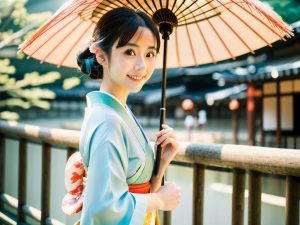
The “Maiko” (apprentice geisha) is often considered a symbol of Kyoto tourism. With their vibrant kimonos, unique hairstyles, and graceful demeanor, they naturally captivate the attention of visitors. However, despite their recognizable appearance, few people deeply understand what a Maiko really represents.
Have you ever wondered, “What’s the difference between a Maiko and a Geiko?” or “What kind of life do they lead?” If so, you’re not alone.
In this article, we will break down the essential role of Maiko, their history, the characteristics of their attire and hairstyles, and how they differ from Geiko. We’ll also share captivating tidbits of information about Maiko culture. By the end of this article, you’ll not only understand Maiko on a deeper level but also notice details during your Kyoto travels that you might have overlooked before.
If you’re planning a trip to Kyoto, this guide will help you appreciate its rich cultural heritage even more. Let’s dive in!
What Is a Maiko? The Basics You Should Know

Maiko are talented young women who work in Kyoto’s “Kagai” (traditional entertainment districts) to preserve and perform traditional Japanese arts. They are considered apprentices to Geiko (Kyoto’s term for geisha) and go through rigorous training while embodying elegance and beauty in everything they do.
The Main Role of a Maiko
The primary role of a Maiko is to entertain guests at tea houses or banquet rooms, where they showcase traditional Japanese arts such as dance, playing the shamisen, and singing. Their charm comes not only from their artistic talents but also from their youthful and fresh demeanor, which resonates deeply with many admirers.
Though their performances are usually held in limited private spaces, spotting a Maiko walking in her neighborhood is one of Kyoto’s most iconic tourist experiences.
Where Do Maiko Work? The “Kagai”

Maiko operate exclusively in distinct districts called “Kagai” (花街), or traditional entertainment quarters. These districts are filled with historic tea houses (ochaya) and restaurants (ryotei), and they serve as the stage for both Maiko and Geiko.
The Five Famous “Kagai” of Kyoto
Kyoto is home to five renowned Kagai, each with its own unique charm and traditions. Here’s a quick overview:
- Gion Kobu (祇園甲部)
This is the largest and most famous Kagai, known for its long-standing history and many active Maiko and Geiko. - Gion Higashi (祇園東)
Adjacent to Gion Kobu, this district has a quieter and more intimate atmosphere. - Pontocho (先斗町)
Situated along a narrow riverside alley, Pontocho boasts quaint traditional Japanese townhouses and scenic views. - Kamishichiken (上七軒)
The smallest of the five, Kamishichiken is cherished for its deep historical ambiance and close-knit community. - Miyagawacho (宮川町)
Nestled near the banks of the Kamo River, this Kagai is known for its refined atmosphere and accessibility from Gion.
Each Kagai serves as a cultural hub, preserving Kyoto’s traditions and offering modern visitors a glimpse into Japan’s elegant past.
Maiko’s Iconic Attire: A Closer Look
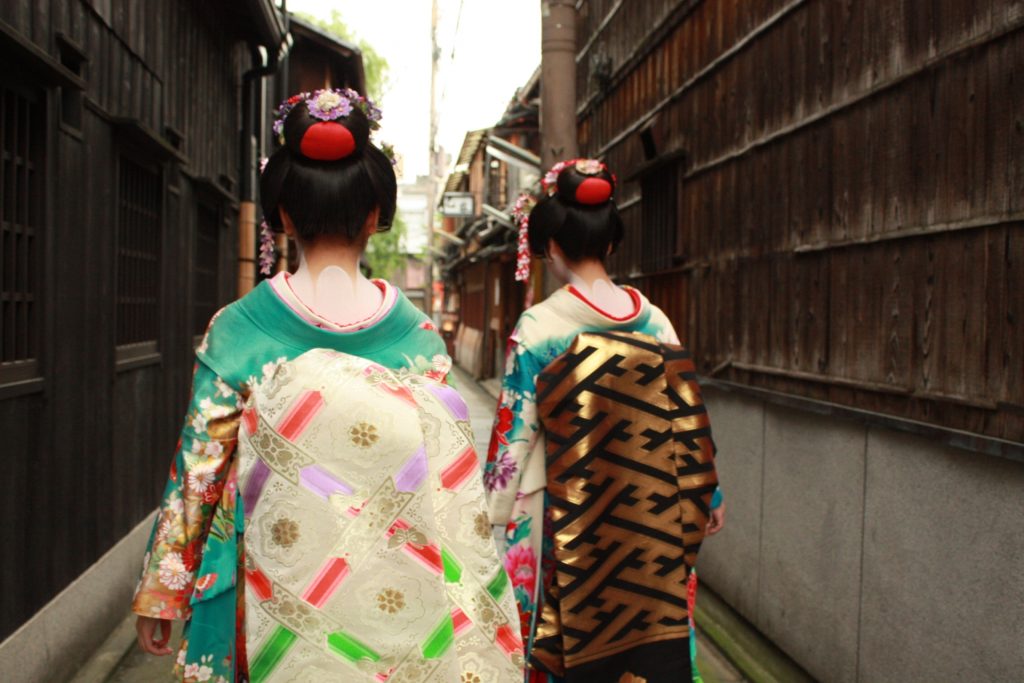
One of the most captivating aspects of Maiko is their elaborate attire. Designed for maximum visual impact, their outfits distinguish them from ordinary kimonos not only by their beauty but also by the identity and cultural depth they convey.
The Furisode and “Darari Obi”
Two significant components of Maiko fashion are furisode (long-sleeved kimono) and the darari obi (a wide and long decorative sash).
- Furisode: The Maiko’s furisode features extraordinarily long sleeves, symbolizing youth and elegance. These kimonos are typically adorned with bright, vibrant patterns that emphasize their lively and fresh charm.
- Darari Obi: The darari obi is a long sash unique to Maiko, cascading down their back almost to the ground. It often displays their tea house’s crest, identifying their affiliation.
This combination creates a stunning silhouette that highlights the Maiko’s refined grace, especially when they perform intricate dances.
Seasonal Themes in Their Attire
Maiko’s kimonos also reflect the changing seasons, incorporating specific motifs that align with Japan’s strong emphasis on seasonal aesthetics. For instance:
- Spring: Cherry blossoms, plum blossoms, and camellias.
- Summer: Goldfish, waves, or other cool, refreshing patterns.
- Autumn: Maple leaves, chrysanthemums, and pampas grass.
- Winter: Pine trees, snowflakes, or celebratory New Year designs.
By simply observing a Maiko’s outfit, you can infer the current season—a subtle yet beautiful reflection of Japanese culture.
Hairstyles and Hair Ornaments: Tradition at Its Finest

A Maiko’s hairstyling is as intricate as her wardrobe. Maiko wear “Nihongami,” a traditional Japanese hairstyle, and the way their hair is styled conveys their experience level and status.
Types of Nihongami
Depending on their stage of training, Maiko wear different hairstyles:
- Wareshinobu
The starting hairstyle for a newly debuted Maiko, featuring a split down the middle and an innocent, youthful appearance. - Ofuku
Worn by experienced Maiko, this style signifies maturity while retaining a touch of freshness. - Sakkou
A transitional hairstyle worn by Maiko preparing to debut as full-fledged Geiko.
These styles are carefully crafted from their own hair, underscoring the Maiko’s commitment to tradition.
Seasonal Hair Accessories (Kanzashi)
The final touch to a Maiko’s hairstyle is the kanzashi (hair ornaments), which change with the seasons and festivals. For example:
- January (New Year): Decorations featuring pine, bamboo, and plum blossoms.
- July (Gion Matsuri): Motifs of fans, fireworks, and summer flowers.
- December (Year-End): Decorative fans and snowflake designs for a festive look.
Kanzashi add seasonal charm and serve as a way to connect the Maiko’s appearance with the natural world.
The Art of Maiko Makeup
The defining feature of a Maiko’s look is her stunning white makeup. This isn’t merely for decoration—it has a historical purpose rooted in practicality and culture.
Why Do Maiko Wear White Makeup?
This iconic makeup style began in the pre-modern era when tea houses were dimly lit with candles. The white “oshiri” makeup made their faces stand out even in poor lighting, ensuring they captured the attention of their guests.
Today, the makeup serves as a cultural symbol, with slight variations to express different stages in a Maiko’s career.
Key Makeup Features
- Red Lips: Younger Maiko often paint only the lower lip red, a sign of their youthful charm, while more experienced Maiko use red on both lips.
- Eyes: Thick eyeliner and hints of red near the eyes accentuate their facial structure.
- Nape Design: The nape of the neck is intentionally left with unpainted “W” patterns to emphasize femininity—considered one of the most alluring details.
Maiko vs. Geiko: What’s the Difference?
While Maiko and Geiko both represent Kyoto’s traditional arts, they fulfill separate roles. Here’s a quick comparison:
| Category | Maiko | Geiko |
|---|---|---|
| Age Range | 15–20 years old | 20+ years old |
| Attire | Vibrant furisode and darari obi | Simple kimono with otaiko obi |
| Hairstyle | Natural hair styled traditionally | Wigs for practical reasons |
| Makeup | Elaborate white oshiroi | Lighter, more natural makeup |
| Role | Youthful charm and artistry | Mature elegance and refined skills |
Maiko are apprentices, often considered a symbol of Kyoto’s youthful aesthetics, while Geiko are fully established performers with years of experience and polished talent.
Preserving Tradition in a Modern Era
With declining numbers of aspirants, the Maiko’s future faces challenges due to changing societal norms and lifestyles. Despite this, significant efforts are being made to preserve the tradition:
- Outreach through Social Media: Sharing their cultural activities on YouTube, Instagram, and other platforms.
- Maiko Experience Studios: Tourists can try authentic Maiko appearances with professional attire and makeup.
- Cultural Preservation Projects: Local governments and organizations support initiatives to maintain the Maiko heritage.
Kyoto’s Cultural Treasure: A Deeper Connection

Maiko represent more than just a tourist spectacle; they embody Kyoto’s history, beauty, and intricate traditions. From their debut as Maiko to their progression into Geiko, every step tells a rich story of dedication and discipline.
Next time you encounter a Maiko in Kyoto, take a moment to appreciate not just her appearance but also the history and effort behind her craft. This is the key to truly understanding and enjoying the Maiko culture.