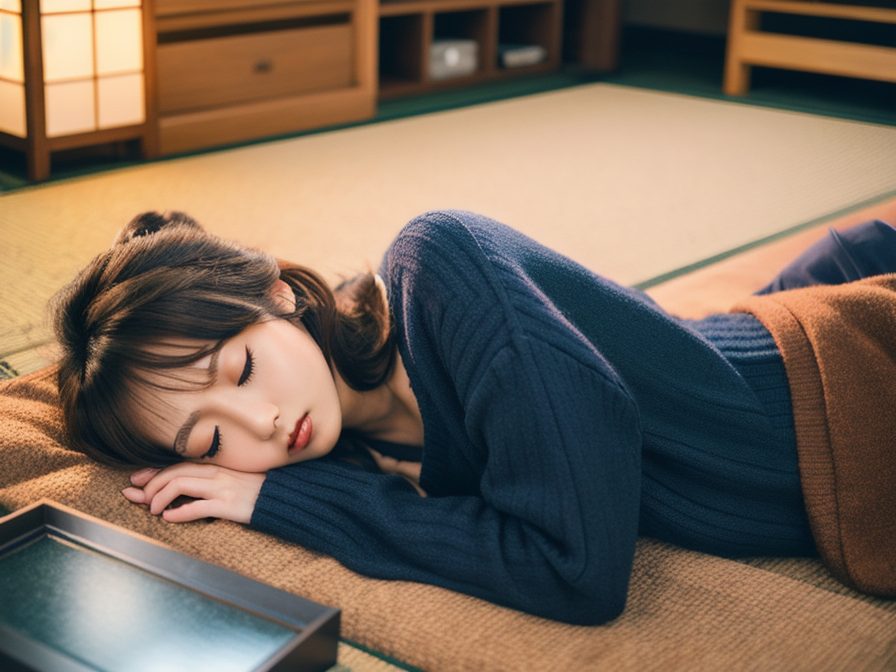
“Kotatsu is always the star of winter… but when did it actually appear in Japan?”
If you’re reading this, you’ve probably wondered the same thing and looked it up. The short answer: kotatsu has long been Japan’s loyal “winter buddy,” evolving over time to fit the needs of everyday life. In this article, we’ll walk through its origins, how the design has changed, and the role kotatsu plays in modern Japanese homes. By the end, that cozy little space you sit in every day might feel just a bit more special.
Kotatsu History|When Did It Become Japan’s Winter Icon?

Born from the Traditional Hearth “Irori”
Tracing the roots of the kotatsu leads us directly to the irori: a square sunken hearth used for heating and cooking. People placed a wooden frame and a cloth over the irori to trap warmth for their legs — and this simple idea became the prototype of the kotatsu.
It wasn’t originally created as a “kotatsu,” but rather as a clever adjustment made to survive cold winters efficiently. The key feature that defines kotatsu today — “warmth from below that spreads gently through the body” — was already present from the very beginning.
Compared to the electric models we use now, the original was quite rustic, but the essence hasn’t changed at all.
Rapid Expansion in the Edo Period
Kotatsu became widely popular during the Edo period. This is when the “horigotatsu,” a sunken style with a hole in the floor, appeared and brought the kotatsu much closer to its modern form.
Homes of that era had poor insulation, and heating the entire room simply wasn’t practical. Kotatsu provided targeted warmth using minimal fuel — a huge plus for everyday households. At the same time, its structure encouraged families to gather around it, helping kotatsu evolve into a symbol of togetherness.
Small housing like nagaya also benefited from this compact, efficient heating. This is exactly why kotatsu quickly became “winter’s main character” in Japanese homes — it matched the lifestyle perfectly.

Modern Evolution in the Meiji and Showa Periods
The next major leap came when the heat source switched from charcoal to electricity. With electric heaters, kotatsu became safer and easier to use, allowing it to spread to even more households.
In the Showa era, “okigotatsu” — a combination of dining table and heater — became the standard. Eating meals, watching TV, doing homework… everything centered around the kotatsu. When people picture a classic Showa-style home, a kotatsu is almost always part of the scene.
At this point, kotatsu was no longer just a heater — it had become the heart of the home, a place where daily life happened.
The reason we jokingly say “I can’t get out of the kotatsu” today? That comfort has been perfected over decades of upgrades.
How Kotatsu Shaped Japanese Culture
A Space That Naturally Brings People Together

One magical thing about kotatsu is how it quietly pulls everyone in. It boosts conversation, encourages shared moments, and creates memories — all without trying.
Even as individual sofas, personal desks, and screens dominate modern life, kotatsu still keeps the “gather around one place” style alive. In Japanese imagery, “family time” and kotatsu are deeply linked for this very reason.
Plus, sitting in the kotatsu often means less screen time and more face-to-face time. In an age of digital overload, this analog “social heater” still plays a surprisingly important role.
A Budget-Friendly Heating System
Kotatsu isn’t just comfy — it’s economical. Unlike heating systems that warm the entire room, kotatsu focuses heat only where you need it.
In older Japanese houses with drafty walls and floors, warming the whole space was inefficient and expensive. But even today, with rising electricity bills, many people rely on kotatsu to minimize costs while staying warm. Combine it with a thick blanket and the heat stays locked in — cozy and cost-effective.
Kotatsu supported Japanese households not just emotionally but financially — a true partner in winter survival.
Overseas Reactions|How the World Sees Kotatsu
Highly Rated for Energy Efficiency

Thanks to anime, dramas, and social media, foreigners have started asking:
“What is that glowing thing under the table!?”
Once they try it, many are impressed by the balance between comfort and energy savings. In colder countries, the idea of heating only the body — not the entire room — is increasingly appreciated.
Comments often describe it as:
- gentle warmth from the feet
- comfortable for people sensitive to strong heating
It also creates a perfect spot for working, reading, or gaming — and the rise of remote work has helped push kotatsu into the global spotlight.
Surprising Cultural Differences
Of course, first-timers are often shocked. The concept of placing a heater under a table and covering it with a blanket feels unusual at first.
And then there’s the legendary kotatsu trap:
“It’s so cozy you can’t escape!”
“Be careful — you’ll fall asleep instantly!”
These “kotatsu side effects” are hilarious to foreigners too. Many online users claim, “If you experience kotatsu once, winter will never be the same again.”
Kotatsu is gradually shifting from “Japanese furniture” to “a symbol of Japanese lifestyle,” attracting interest from around the world.
The Future of Kotatsu|How Heating Culture Will Evolve
Designed for the Modern Lifestyle
The traditional image of kotatsu in tatami rooms is fading. Nowadays, stylish models that match Western interiors and minimalist designs are trending. Some look like normal coffee tables — you wouldn’t even know it was a kotatsu until you peek underneath.
Younger generations see kotatsu as a “winter reward item” rather than something old-fashioned. Paired with trendy blankets — from Scandinavian patterns to sleek monochromes — kotatsu is becoming an Instagram-worthy interior piece.
More people live alone or work remotely, so compact models like personal kotatsu or desk-style kotatsu are increasingly popular.
As lifestyles change, kotatsu continues to evolve into a heating style that adapts to personal comfort and modern design.
Why the Kotatsu Will Continue to Be Loved

The kotatsu has evolved over centuries, beginning with the traditional irori and transforming alongside the changing lifestyles of each era. It has supported family togetherness, served as an energy-efficient heating solution, and even gained attention from people around the world. If you happen to be reading this while sitting inside your kotatsu, remember that its gentle warmth is backed by hundreds of years of Japanese wisdom and everyday ingenuity. As times change, the kotatsu will continue to adapt while remaining an essential part of winter life in Japan — a comforting presence that brings people closer together.