The Charm of a Japanese Cultural Tradition and 5 Points of International Evaluation
“Hanko doesn’t fit the times anymore, right?” — Many people search this keyword with that exact question in mind. Although hanko is often seen as a symbol of paper-based culture and thought of as something “no longer necessary,” in Japan it still plays an important role in daily life, in business, and in ceremonial occasions.
To give the conclusion first, hanko is not just a substitute for a signature — it is an important cultural element that supports trust and identity unique to Japan.
In this article, we will organize how hanko has taken root in Japanese society, explain its charm and roles, and also explore surprising reactions from overseas. By the time you finish reading, the way you look at hanko will surely change.
What Is a Hanko?
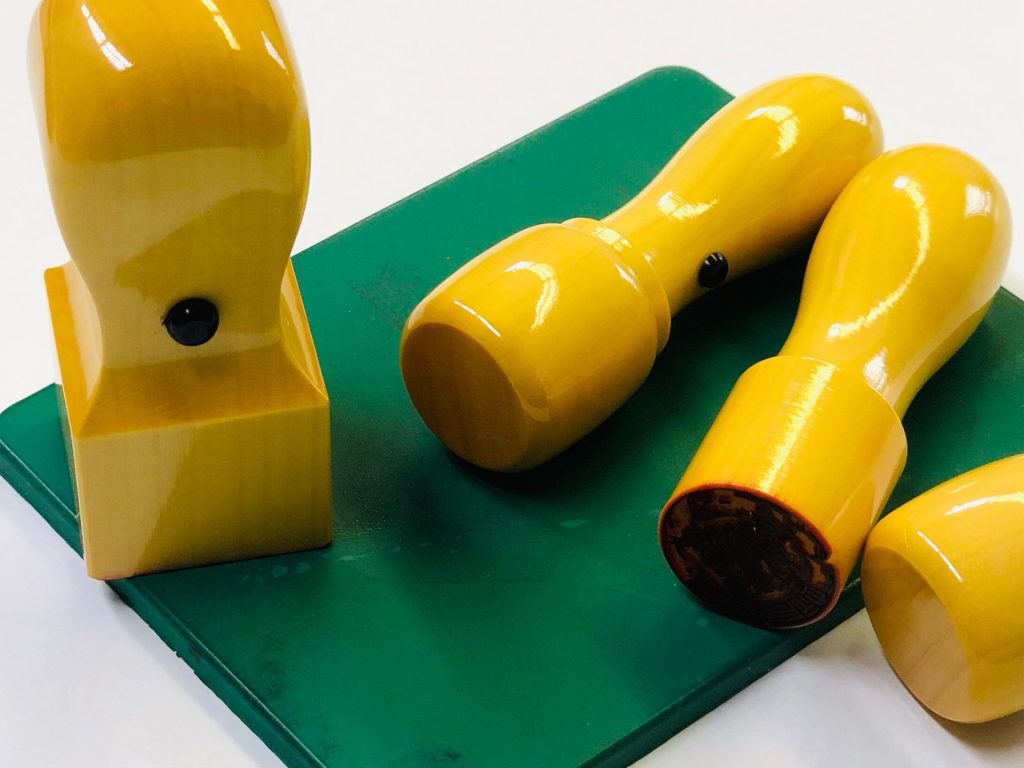
A Cultural Tradition Rooted in Japanese Society
The Birth of Hanko and Its Historical Role
Hanko originally existed as a special item called a “seal,” used to show authority and status. In the past, it was used only by a country’s leaders or officials, and stamping a hanko on a document played the role of certifying that “this is an official document.”
Compared to cultures that mainly use signatures, this may seem unusual, but in Japan, where many people once could not write, leaving a mark with ink allowed anyone to show “proof of oneself.”
Over time, hanko spread from the hands of great people to samurai, merchants, and then to ordinary citizens. From contracts to receipts, any kind of “promise” began to require a hanko, and the idea that “a document with hanko is properly made” became firmly rooted in society.
In this way, hanko evolved into something that carries Japanese “trust” and “responsibility,” going beyond being just a tool.
The Differences Among Jitsuin, Ginkō-in, and Mitome-in in Modern Use
Today in Japan, when we say “hanko,” we typically refer to three types: jitsuin (registered seal), ginkō-in (bank seal), and mitome-in (personal seal).
Even though they are all hanko, their roles and weights are completely different — this is one of the points that makes hanko culture interesting and complicated.
The jitsuin is the most important hanko, registered with the municipality and used for major life events such as purchasing a house or car or signing a loan. Stamping it means “I take responsibility for this major decision in my life.”
The ginkō-in is used for opening or managing a bank account, serving as a key that protects financial transactions.
The mitome-in, on the other hand, is used casually for things like receiving packages or signing internal documents — it is the hanko that blends the most naturally into everyday life.
Thus, hanko are divided by the “weight of responsibility” depending on use, and Japanese people unconsciously use them accordingly. This shows that hanko continues to live not merely as a stamp but as a “tool that visualizes trust and promises.”
Is the Hanko Necessary?

The Existence Questioned in the Digital Era
Differences from Electronic Signatures and Why Hanko Culture Remains
With the spread of electronic signatures and digital contracts, the argument “we no longer need hanko” has rapidly increased over the past few years. Without a doubt, in terms of speed, cost, and manageability, digital methods are overwhelmingly superior.
Even so, hanko culture does not disappear immediately because it contains “emotional value” that cannot be explained only by functionality.
Electronic signatures are uniform pieces of data that look the same to anyone, but hanko includes the design of the imprint, the way it is stamped, and even the texture of paper — it preserves the “atmosphere of that moment.”
In important contract occasions, the shared tension and excitement when everyone stamps the document together is difficult to replicate with a single click.
Also, Japan has long held the common understanding that “a document with a hanko is official.” Even if digitalization advances, this sense of trust does not change overnight.
We are currently in a transitional phase, balancing between digital and analog — “we use electronic systems here” and “we intentionally use hanko here.”
The Unique Charm of Hanko in Japan
The Value as a Symbol of Trust and Its Historical Nature
One charm of hanko is that it makes the “proof of trust” easy to visualize. Just by having an imprint stamped, the meaning of “the person confirmed this and takes responsibility” is contained.
Before stamping a hanko, many people carefully re-read the document — hanko acts as a trigger to check content seriously.
Furthermore, its “long historical continuation” is part of its charm.
Seeing the hanko on documents from decades ago allows us to feel the existence of the people who lived in that time.
If you have ever seen a document stamped by your grandparents, you may have felt a connection across time — “This hanko was stamped by that person.”
Artistic Value Created by Craftsmanship and Branding Power
Another important point is the artistic nature of hanko itself. Hand-carved hanko have slightly different line thicknesses and balances — truly a “one-of-a-kind imprint in the world.”
Even with the same surname, each imprint has individuality and exists like a small logo.
Materials also vary — wood, buffalo horn, stone, and more — with different colors and textures changing the mood completely.
Recently, colorful hanko and pop fonts have increased, and more people enjoy them as “a daily item that also represents their personal brand.”
In business scenes, using a carefully chosen hanko can be a subtle expression of one’s identity.
Overseas Reactions to Hanko Culture
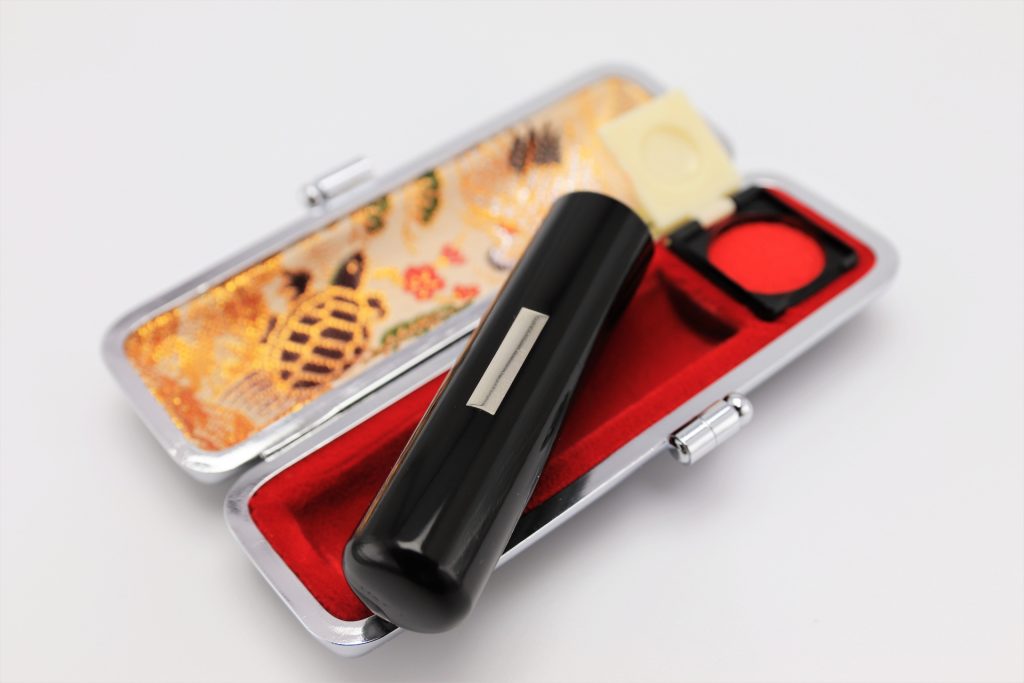
Surprises and Reasons Why It Gains Popularity Abroad
From overseas, hanko culture appears unique.
Foreigners are especially surprised that “instead of signatures, everyone owns their own seal” and uses it for banking or contracts.
Some even wonder, “Is relying on an imprint really safe?” — yet many appreciate the idea of having “your own special mark.”
There are five main reasons hanko gains popularity overseas:
- Names can be converted into kanji and made into an “original item.”
- Small and lightweight — perfect as a souvenir.
- Kanji and calligraphy itself are beautiful designs.
- A simple stamp acts as a signature — very convenient.
- Creating or stamping hanko becomes a cultural tourism activity.
Thus, hanko are not simply seen as “an outdated custom” but rather a culture that combines “Japanese uniqueness” and “design value.”
As inbound tourism returns, hanko has the potential to continue gaining attention as an experience-based souvenir.
The Future of Hanko Culture
Where Analog and Digital Coexist
Efforts to Preserve Hanko Culture and New Ways of Use
In the coming era, hanko may shift from “a main role in all procedures” to “a meaningful presence in special situations.”
For important ceremonies and major decisions, real hanko will be used, while digital methods will be used for everyday tasks that require speed — a further evolution of the coexistence model.
Efforts to preserve hanko culture have already begun:
- Craftsmen’s hand-carving skills are being shared online
- Services for foreigners converting their names into kanji for custom orders
- Use of hanko as logo designs and merchandise
- “Hanko play” and notebook decoration becoming popular among younger generations
Because digitalization progresses, there will be greater value in the act of “purposely stamping a hanko.”
Hanko will not become a relic of the past — it will remain as a symbol of Japanese culture and aesthetics while transforming its form.
Rather than dismissing hanko as merely an “old custom,” if you find your own way to engage with it, you may be surprised by how much attachment you develop.